Bronze is the one shower finish where color change can be the finish working exactly as designed, not damage, but only if it's the right type of bronze. Oil-rubbed bronze (ORB) is a living finish meant to darken and develop patina through use. PVD bronze is a sealed coating meant to stay color-stable indefinitely. Treating one like the other is what causes most of the disappointment people report with bronze fixtures, not the material itself.
Why Bronze Confuses Even Careful Owners
Most shower finish guides assume "clean it gently and it'll be fine." Bronze breaks that assumption, because two genuinely different finishes are sold under the same name, and they call for close to opposite care.
If you clean a living ORB finish the way you'd clean a sealed PVD coating, you'll scrub away the character it's designed to develop and end up with a blotchy, uneven fixture instead of the rich patina you paid for. If you treat a PVD bronze fixture as if it's meant to age naturally, you'll let bleach, hard water, or the wrong cleaner dull a finish that was never supposed to change at all.
Neither mistake is obvious until months later, which is why so many people end up unsure whether what they're looking at is their fixture aging correctly or quietly being ruined. The fix starts with figuring out which type you actually have, before any cleaning product touches it.
Oil-Rubbed Bronze vs. PVD Bronze: Why This Distinction Comes First
Oil-rubbed bronze starts as a fixture with a dark oil-based finish applied over its base metal, then hand-rubbed to reveal lighter highlights on raised edges and details. It's explicitly designed as a living finish: water exposure, air, and touch cause it to darken in some areas and lighten at high-contact points like handles, developing variation over months and years. Manufacturers of genuine ORB fixtures expect this and often market it as a feature, not a flaw. Scrubbing an ORB fixture aggressively to restore a uniform original color works against the finish's design and can strip it unevenly, leaving blotchy patches that look like damage rather than natural aging.
PVD bronze, in contrast, is a vacuum-applied metallic coating engineered to resist color change entirely, closer in behavior to PVD gun metal or PVD gold than to traditional bronze. It's built for consistency, not evolution: any dulling, patchiness, or color shift on a PVD bronze fixture is damage, not character, and it's caused by the same culprits as other PVD finishes, bleach, ammonia, and abrasive contact.
How to tell which one you have:
- Check the product listing or spec sheet for "PVD," "physical vapor deposition," or "living finish" language. ORB fixtures are almost always marketed with language about patina and aging as a selling point.
- Look at wear patterns. If handles or high-touch areas have lightened unevenly over time while the rest stayed dark, that's ORB behaving normally. If the whole fixture has dulled uniformly or developed a hazy film, that's more consistent with PVD damage or hard water buildup.
- When in doubt, check the manufacturer's care instructions for your specific fixture. This matters more for bronze than for almost any other finish, since the wrong assumption leads to the wrong care routine entirely.
Daily and Weekly Cleaning Routine (Safe for Both Types)
The good news: the safe baseline routine is the same for both ORB and PVD bronze. The difference is intent, not method, ORB tolerates and even benefits from a lighter touch, while PVD needs the same discipline as gun metal or matte black.
After each use (15 seconds):
- Run a hand or small squeegee over the fixture to clear standing water.
- Wipe with a dry microfiber cloth if droplets remain, especially on PVD bronze where mineral spotting is more visible.
Weekly clean (2-3 minutes):
- Mix a few drops of pH-neutral dish soap into warm water.
- Dampen a soft microfiber cloth, wrung out so it's damp, not wet.
- Wipe the full fixture gently, including joints and the base of the shower head.
- Rinse with a second clean, damp cloth to remove soap residue.
- Dry immediately with a dry microfiber cloth.
For ORB specifically, a lighter, less frequent wipe (rather than the aggressive weekly scrub some guides recommend) allows the natural patina to develop more evenly rather than being repeatedly disturbed.
Monthly check:
Look at nozzles for uneven spray or reduced flow, and on ORB fixtures, note whether color variation is developing gradually and evenly or forming as a blotchy patch, which can indicate uneven cleaning pressure rather than natural aging.
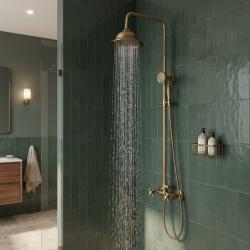


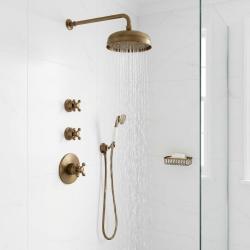
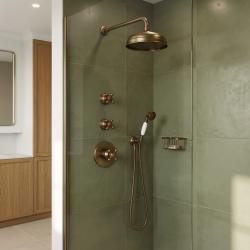
How to Remove Limescale and Water Spots Without Disturbing the Finish
Safe method for both ORB and PVD bronze:
- Mix one part white vinegar to three parts warm water.
- Apply to a soft microfiber cloth, never directly onto the fixture.
- Wipe the affected area gently.
- Leave it on for no more than 3-5 minutes. This matters even more for ORB, since extended acid exposure can strip the oil-based finish unevenly and interfere with natural patina development, not just cause the dulling it would cause on PVD.
- Wipe clean with a second damp cloth.
- Dry immediately.
For stubborn limescale on nozzles:
- Removable silicone nozzles: rub gently with a fingertip under warm running water.
- Fixed metal nozzles: use a soft-bristled toothbrush with the diluted vinegar solution, light pressure only.
A bronze-specific caution: on ORB fixtures, avoid targeting limescale removal only on visible high-touch spots while leaving the rest of the fixture untouched, since this can accelerate uneven patina development in a way that looks more like damage than natural variation. Clean the whole fixture at once, even if only part of it shows visible spotting.
What to Never Use on Bronze Finishes
|
Never use |
Why it damages the finish |
|
Bleach or bleach-based cleaners |
Strips both ORB oil finish and PVD coating, causing patchy discoloration on either type |
|
Ammonia-based glass or bathroom cleaners |
Degrades PVD coatings with repeated use; strips ORB's oil finish unevenly |
|
Abrasive scouring pads or steel wool |
Scratches PVD coating visibly; strips ORB down to bare metal in patches |
|
Magic eraser-type melamine sponges |
Mild abrasive that wears PVD coating; disturbs ORB's patina unevenly |
|
Undiluted vinegar or vinegar left on for extended periods |
Dulls PVD finish; strips ORB's oil-based coating faster than intended |
|
Strong acidic descalers |
Fastest way to strip either finish down to the base metal |
|
Metal polish or "brass restorer" products |
Designed to restore shine, which actively removes the ORB patina that's supposed to be there |
Do's and Don'ts at a Glance
|
Do |
Don't |
|
Identify whether your fixture is ORB or PVD before cleaning |
Assume all "bronze" fixtures are cared for the same way |
|
Clean the whole fixture evenly, even on ORB |
Spot-clean only visible marks on an ORB fixture |
|
Use pH-neutral soap and warm water |
Use bleach, ammonia, or metal polish |
|
Accept gradual, even color variation on ORB as normal |
Scrub to restore ORB to its original uniform color |
|
Dry PVD bronze after every use like any other PVD finish |
Treat PVD bronze as a living finish that can be left to age |
|
Check manufacturer instructions for your specific fixture type |
Guess based on how another bronze fixture you've owned behaved |

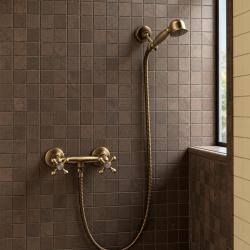


Extra Tips for Hard Water Areas and Long-Term Care
- For PVD bronze, treat it exactly like gun metal or matte black in hard water areas: dry after every use, consider a shower filter or water softener if buildup is frequent, and check connection points monthly.
- For ORB, hard water deposits can actually interrupt even patina development by sitting on top of the oil finish rather than allowing consistent air and touch exposure. Wipe with plain water more frequently in hard water regions, without necessarily doing a full soap clean every time.
- Avoid switching cleaning products frequently on ORB fixtures, since inconsistent products can cause uneven patina development that's hard to reverse.
- Ventilate the bathroom after showering for both finish types, since trapped humidity slows drying and, for PVD, increases spotting risk.
- Re-check manufacturer guidance periodically, especially if you're unsure which bronze type you have, since some manufacturers update care recommendations as coating technology changes.
An oil-rubbed bronze set suits anyone who wants a fixture that visibly ages and develops character over years, while a PVD bronze set suits anyone who wants the bronze color to look identical on day one and year ten.
Bronze is the rare shower finish where the "right" answer depends on which type you own. Confirm whether your set is oil-rubbed or PVD before choosing a routine, then apply the right kind of care: patience and even handling for ORB, and the same discipline as any PVD finish for PVD bronze. Getting this backwards is what causes most of the disappointment people report with bronze fixtures, not the material itself.
FAQ
Is it normal for a bronze shower fixture to change color over time?
Yes, if it's oil-rubbed bronze. This is a living finish designed to darken and develop patina through normal use. If it's PVD bronze, color change indicates damage rather than expected aging.
How do I know if my bronze fixture is oil-rubbed or PVD?
Check the product listing for "PVD," "physical vapor deposition," or "living finish" language, or look at wear patterns: uneven lightening at high-touch spots suggests ORB, while uniform dulling or haze suggests PVD damage or buildup.
Can I use metal polish to make my bronze fixture shinier?
Not if it's oil-rubbed bronze, since polish removes the patina that's supposed to develop. PVD bronze doesn't need polish either; it's designed to stay consistent with gentle cleaning alone, and polish products can damage the coating.
Will vinegar ruin an oil-rubbed bronze finish?
Undiluted or prolonged vinegar exposure can strip the oil-based finish unevenly. Diluted vinegar (1:3 with water), applied briefly and wiped off within a few minutes, is generally safe for occasional limescale removal on both types.
Why does my bronze shower fixture look patchy instead of evenly aged?
Patchiness on ORB usually comes from spot-cleaning only visible marks rather than the whole fixture, or from switching between cleaning products inconsistently. Clean the entire fixture evenly to allow patina to develop uniformly.
Should I clean a PVD bronze fixture differently from an ORB one?
Yes. PVD bronze needs the same discipline as gun metal or matte black: dry after every use, avoid all harsh chemicals. ORB tolerates lighter, less frequent cleaning, and benefits from it, since less disturbance means more even patina development.
Does hard water affect oil-rubbed bronze the same way it affects other finishes?
Not quite. Hard water deposits can sit on top of the oil finish and interrupt even patina development, rather than just causing visible spotting as it would on PVD or chrome. Wiping with plain water more frequently helps more than a full soap clean on ORB.
Can I restore a damaged bronze fixture back to its original look?
For PVD bronze, no; once the coating is stripped or dulled by harsh chemicals, it can't be restored at home. For ORB, uneven patina from past over-cleaning may even out over time with consistent, gentle care going forward, though it won't reverse instantly.


